Commercial Refrigeration
Over 17 Years of Commercial Refrigeration Experience.
From schools to hospitals, we design and construct effective systems for any commercial business.
Redtech Commercial Refrigeration has proudly been servicing South Australia since 2015. Over the years, we have delivered commercial refrigeration solutions to a diverse range of satisfied clients. At Redtech, you can rely on our practical, functional designs and high-quality workmanship. We provide commercial refrigeration services including sales, servicing and repairs.
Redtech Commercial Refrigeration specialises in providing end-to-end commercial refrigeration solutions throughout South Australia. The company serves a variety of sectors, including food processing, retail, and healthcare, with a focus on delivering high-quality designs, skilled workmanship, and reliable support. They offer a full suite of services, from new installations and sales to preventative maintenance and emergency repairs.
What Sets Us Apart
- Experienced & knowledgeable staff
- Competitive prices
- Prompt end-to-end service
- Over 17 years of experience
- No-obligation, free quotes
- Registered & licensed professionals
Our Clients
- Businesses
- Retail
- Commercial
- Government
- Hospitality
- Aged Care
Commercial Refrigeration in South Australia’s Food Industry
Commercial refrigeration is a vast and critical field in South Australia’s food industry, encompassing everything from farm to plate. The solutions and products applied vary significantly based on the scale and specific needs of the business. Here’s a breakdown of common applications across different sectors.
1. Primary Producers and Growers
For farmers and growers, the focus is on on-site storage to maintain product quality immediately after harvest.
- Cool Rooms and Freezer Rooms: These are custom-built, insulated rooms of varying sizes, from small mobile units for a farmer’s market stall to large, permanent structures for a large-scale orchard or abattoir. They are the most fundamental solution for storing bulk produce, meat, or dairy.
- Blast Chillers/Freezers: These are essential for rapid cooling. For example, a vegetable grower might use a hydro-cooler or a walk-in blast chiller to quickly bring down the core temperature of freshly picked produce, preserving its freshness and extending its shelf life before transport. Butchers use them to rapidly cool carcasses to prevent bacterial growth.
2. Butchers and Small-Scale Food Producers
These businesses require a combination of storage, processing, and display refrigeration.
- Walk-in Cool Rooms and Freezer Rooms: These are standard for back-of-house storage of meat cuts and other ingredients. Butchers often have “meat rail” systems within their cool rooms for hanging carcasses, allowing for proper air circulation and aging.
- Refrigerated Display Cases (Serve-over Counters): These are the centerpiece of a butcher’s shop or deli. They are designed to showcase products like meat, small goods, and cheese. They often use a combination of “cold plates” (a chilled base) and gentle blown air to maintain a stable temperature without drying out the product.
- Preparation Counters: Also known as refrigerated prep benches, these units combine a stainless steel work surface with refrigerated drawers or cabinets underneath, allowing butchers to keep ingredients at a safe temperature while they work.
- Dry-Aging Cabinets/Rooms: A specialized type of refrigeration designed for dry-aging meat. These units precisely control temperature and humidity to create the ideal environment for the aging process, which enhances flavour and tenderness. They often feature Himalayan salt walls.
3. Cold Storage and Warehouses
This sector is about large-scale, industrial-level refrigeration for distribution and long-term storage.
- Ammonia-based Refrigeration Plants: For large cold storage facilities and food manufacturing plants, ammonia is a common refrigerant. While it requires strict safety protocols, it’s highly efficient, environmentally friendly (with a Global Warming Potential of zero), and cost-effective for high-capacity applications.
- Large-Scale Chiller/Freezer Rooms: These are massive, purpose-built warehouses with insulated panels and powerful refrigeration systems to maintain consistent temperatures for pallets of frozen or chilled goods. They are equipped with industrial-strength doors, high-speed doors, and strip curtains to minimize temperature loss during loading and unloading.
- Refrigerated Docks and Loading Bays: These are temperature-controlled zones at the edge of a warehouse that connect to trucks, ensuring the cold chain is never broken during the transfer of goods.
4. Supermarkets and Retail
Retail refrigeration focuses on showcasing products to customers while maintaining optimal temperature and energy efficiency.
- Refrigerated Display Cabinets: This is a broad category including:
- Multi-decks (Open-fronted cabinets): Common for fresh produce, dairy, and drinks. They are designed for easy customer access but can be energy-intensive. Modern versions often have night blinds or doors to reduce energy use.
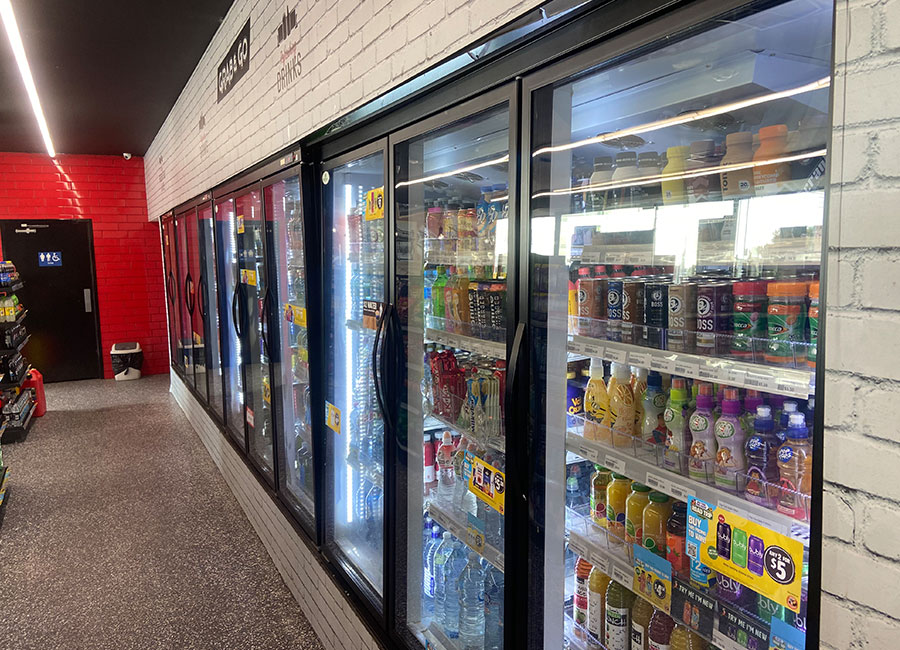
- Glass Door Cases: Used for frozen foods, meat, and beverages. They are more energy-efficient than open multi-decks as they trap the cold air.
- Island Freezers (Chest Freezers): Often used for ice cream, frozen vegetables, and promotional products.
- Serve-over Counters: As seen in butchers and delis, these are also a feature in supermarket deli and seafood sections for staff-served products.
- Remote vs. Self-Contained Systems:
- Remote systems: Used in large supermarkets. The condensing units (the part that removes heat) are located outside, often on the roof, and connected to the in-store display cabinets via refrigerant piping. This reduces noise and heat in the store.
- Self-contained units: These are smaller, all-in-one units with the condensing unit built into the cabinet. They are common in smaller convenience stores, cafés, and for promotional displays.
5. Factories and Manufacturing
Refrigeration in manufacturing is about process cooling and large-scale storage of ingredients and finished products.
- Process Chillers: These are used to cool down a liquid (like water or glycol) that is then circulated to cool down industrial processes, such as mixing vats, bakery equipment, or bottling lines.
- Air-Cooled and Water-Cooled Condensing Units: The type of unit chosen depends on the scale and available resources. Water-cooled systems are often more energy-efficient but require a reliable water source and cooling tower.
- Automated Storage and Retrieval Systems (ASRS): In highly automated facilities, robotics handle the movement of goods in and out of massive, temperature-controlled warehouses, requiring integrated, large-scale refrigeration systems.
Responsive and Responsible for…